You live in the lightning capital of the country
Florida gets more lightning than any other state, and Central Florida sits in the thick of it. From June through September we get thunderstorms most afternoons, and every one of them is putting voltage spikes onto the grid your house is connected to. If you have lived here through a summer, you already know what that sounds like.
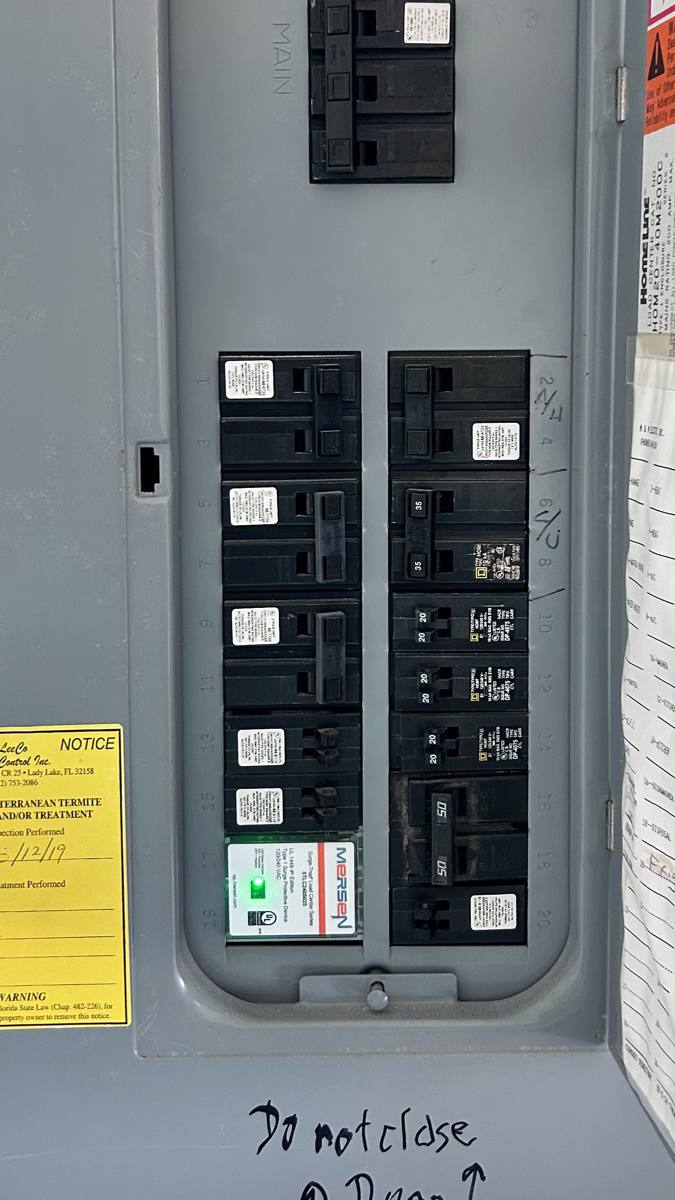
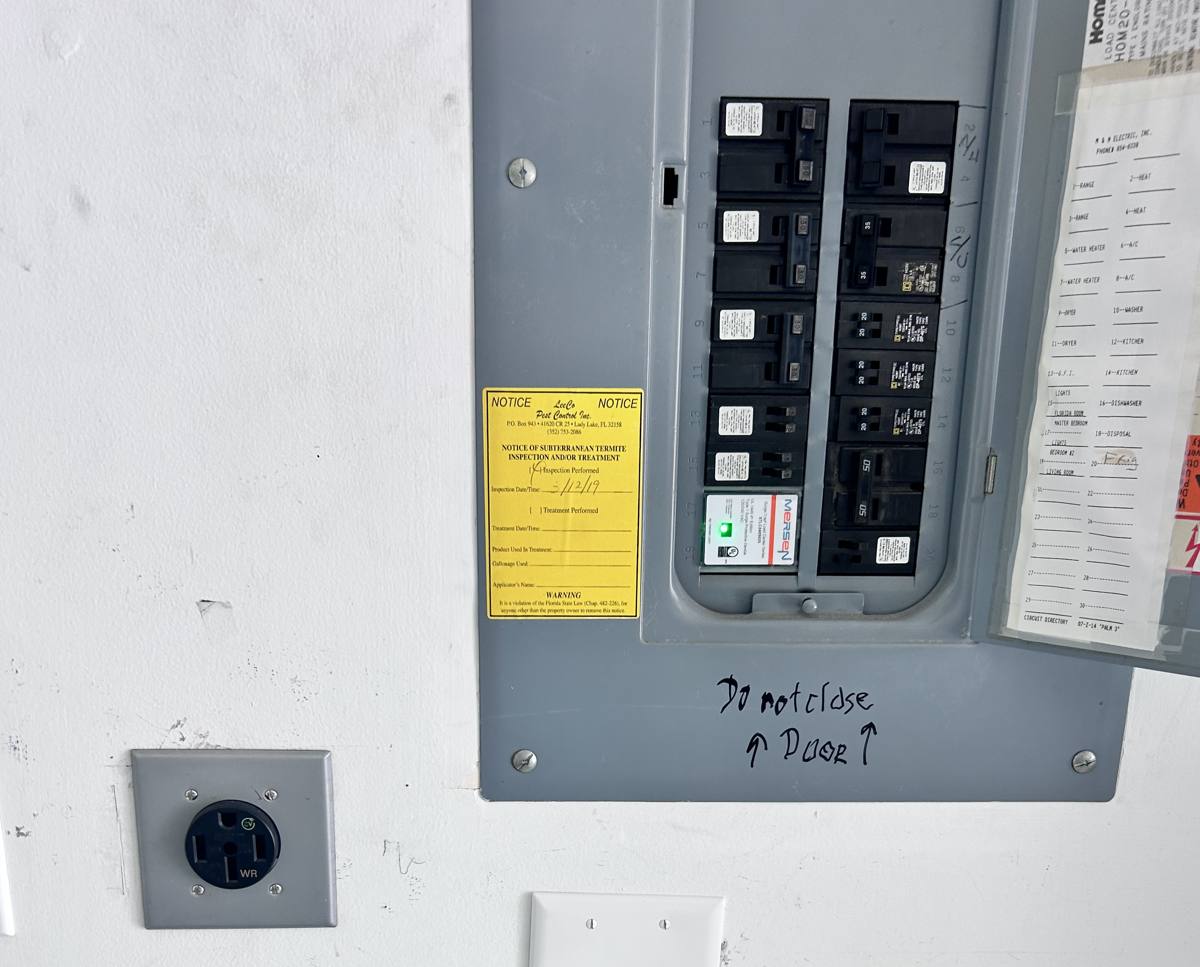
A whole-home surge protector installs at your electrical panel and clamps down on voltage spikes before they travel out to your circuits. It is not a power strip. It is a device wired into the service that catches the surge at the point where it enters the house, so the damage stops there instead of at your air handler control board.
Most surges do not come from lightning
This surprises people. A direct strike is the dramatic version, but the majority of damaging surges are smaller, more frequent, and come from ordinary sources:
- Utility switching. When the power company reroutes load, restores service after an outage, or a transformer cycles, the grid sends a spike down the line.
- Nearby strikes. Lightning does not have to hit your house. A strike a quarter mile away can induce a surge onto the utility lines feeding your street.
- Your own equipment. Every time a large motor kicks on and off inside the house, it puts a small spike on your wiring. Your AC compressor, pool pump, and well pump do this dozens of times a day.
That last one matters more than people realize. Those small internal surges do not kill anything on the spot. They degrade electronics over time, which is why a control board fails three years in and nobody connects it to anything. It just looks like the appliance wore out.
What it actually protects
Modern homes are full of equipment with circuit boards in it, and boards are what surges destroy. In a typical Villages home that means:
- The air conditioning system, which is usually the single most expensive thing on the list
- Refrigerator, range, dishwasher, washer, and dryer, all of which run on control boards now
- Televisions, computers, routers, and streaming equipment
- Garage door openers and irrigation controllers
- Golf cart chargers and EV charging equipment
- LED fixtures and dimmers, which are more sensitive than the old incandescent stuff they replaced
- Pool and spa equipment, including variable speed pump controls
A surge protector needs a spot in your panel. If your panel is full or already at capacity, we will tell you that up front rather than cramming something in. In a lot of cases the smart move is to handle it during a panel upgrade, since the panel is already open and there is room to do it properly.
How the installation works
This is a straightforward job for a licensed electrician. The device mounts at or in your main panel and connects to the busbar through a dedicated breaker, with the shortest practical lead length, because long leads reduce how well the device performs. Power is off for a short window while we make the connections, and most installs are done in a couple of hours.
We size the device to your service and to how your panel is built, and we go over what we are putting in before we install it. The units we use have an indicator light on the front so you can tell at a glance that the protection is still live, because these devices do their job by absorbing energy, and after enough hits they need replacing. A protector with a dead indicator is just a gray box on your wall.
Every install is permitted where the jurisdiction requires it and performed under our Florida Certified Electrical Contractor license, EC13002807.
Layered protection is the honest answer
We will not tell you a panel device makes your house bulletproof. Nothing stops a direct strike to the structure. What a whole-home unit does is knock the big incoming spikes down to a level your equipment can survive, and that handles the large majority of what Central Florida throws at a house.
For the sensitive things you care most about, the televisions, the computer, the home theater equipment, a quality point-of-use protector at the outlet gives you a second layer. The panel device takes the hit first and the local one cleans up the remainder. That combination is what actually protects electronics, and any electrician who tells you one device alone is total protection is selling you something.
Serving The Villages, Sumter, Marion & Lake County
We install whole-home surge protection throughout The Villages, all districts, plus Leesburg, Lady Lake, Fruitland Park, Summerfield, Wildwood, Oxford, Belleview, Ocala, and the surrounding communities. If you are anywhere in Sumter, Marion, or Lake County and you are not sure whether we reach you, call and ask.